




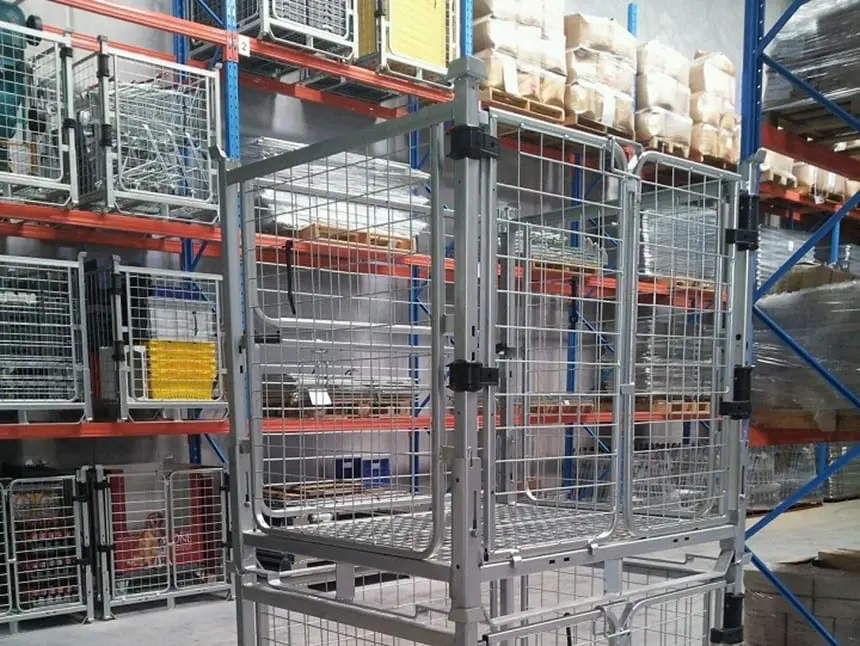
The ROI of investing in foldable cage systems typically ranges from 12-24 months, driven by significant cost savings in storage space, reduced transportation expenses, and improved operational efficiency. These systems can reduce warehouse space requirements by up to 75% when empty, whilst minimising product damage and streamlining logistics workflows throughout the supply chain.
Understanding the financial impact of foldable cage systems
Calculating the return on investment for foldable cage systems requires examining both direct cost reductions and operational improvements across your entire logistics operation. The financial benefits extend beyond simple storage savings to encompass reduced labour costs, improved space utilisation, and enhanced workflow efficiency.
The framework for measuring ROI includes initial investment costs, ongoing operational savings, and long-term productivity gains. Key financial benefits typically manifest in reduced warehouse space requirements, lower transportation costs due to improved cubic efficiency, and decreased product damage rates.
Investment evaluation should consider the complete logistics value chain, from warehouse operations to final delivery. This comprehensive approach ensures accurate ROI calculations that reflect the true financial impact of implementing foldable cage solutions.
What are the main cost savings from foldable cage systems?
The primary cost savings from foldable cages stem from space optimisation, with empty units requiring up to 75% less storage space than traditional rigid containers. This dramatic reduction in storage requirements translates directly into lower warehouse rental costs or increased capacity within existing facilities.
Transportation cost reductions occur through improved vehicle utilisation. Foldable cages maximise cubic efficiency during both loaded and return journeys, reducing the number of transport cycles required and lowering fuel consumption per unit transported.
Labour cost savings emerge from reduced handling requirements. The ergonomic design of foldable systems minimises manual lifting and repositioning, whilst the stackable nature reduces the number of handling steps throughout the logistics process.
Product damage reduction represents another significant saving area. The protective mesh structure and secure design of foldable cages substantially reduce shrinkage and damage rates compared to traditional packaging methods, protecting profit margins and customer satisfaction.
How do foldable cage systems improve warehouse efficiency?
Foldable cage systems enhance warehouse efficiency through streamlined operations that reduce handling time and improve workflow organisation. The consistent dimensions and stackable design create predictable storage patterns that optimise space utilisation and simplify inventory management.
Loading and unloading processes become significantly faster due to the ergonomic design and excellent product visibility provided by mesh construction. This transparency reduces picking errors and eliminates time-consuming product verification steps.
Inventory management improves through standardised container sizes that integrate seamlessly with existing warehouse management systems. The uniform dimensions facilitate accurate space planning and inventory tracking throughout the storage and distribution process.
Workflow optimisation occurs naturally as the foldable design eliminates container return logistics challenges. Empty units collapse for efficient return transport, reducing the complexity of reverse logistics operations and freeing up valuable warehouse space.
What factors influence the ROI timeline for foldable cage investments?
The payback period for foldable cage investments depends primarily on operational scale and current storage methods. High-volume operations with significant space constraints typically achieve faster ROI through immediate storage cost reductions and improved throughput efficiency.
Warehouse size and configuration significantly impact ROI timelines. Facilities with premium rental costs or space limitations see accelerated returns, whilst operations with abundant low-cost space may experience longer payback periods.
Current storage methods influence the magnitude of potential savings. Operations transitioning from inefficient traditional containers or manual handling systems typically achieve faster ROI than those upgrading from already optimised solutions.
Implementation scope affects the timeline, with comprehensive rollouts across multiple locations or product lines generating economies of scale that accelerate return on investment compared to limited pilot implementations.
How do you calculate the total cost of ownership for foldable cage systems?
Total cost of ownership calculation begins with initial investment costs including cage purchase price, any required infrastructure modifications, and staff training expenses. These upfront costs form the baseline for ROI calculations.
Ongoing operational expenses include maintenance requirements, replacement costs for wear components, and any additional handling equipment needed to maximise system efficiency. Foldable cages typically require minimal maintenance due to their robust construction.
Training requirements represent a one-time cost that includes staff education on proper folding techniques, stacking procedures, and safety protocols. This investment ensures optimal system utilisation and longevity.
Long-term operational savings encompass reduced storage costs, lower transportation expenses, decreased labour requirements, and minimised product damage. These ongoing benefits compound over time, creating substantial cumulative value that often exceeds initial investment costs within the first year of operation.
Key takeaways for maximising foldable cage system ROI
Maximising ROI requires strategic implementation that aligns cage selection with specific operational requirements and volume patterns. Choosing the appropriate cage specifications for your product mix and handling processes ensures optimal efficiency gains.
Comprehensive staff training accelerates ROI by ensuring proper system utilisation from day one. Well-trained personnel maximise the efficiency benefits whilst minimising wear and maintenance costs through correct handling procedures.
Integration with existing warehouse management systems amplifies benefits by enabling accurate tracking and optimised storage allocation. This technological alignment creates synergies that enhance overall operational efficiency.
Regular performance monitoring and adjustment ensure sustained ROI optimisation. Tracking key metrics such as space utilisation, handling times, and damage rates enables continuous improvement and validates investment returns over time.
Explore our comprehensive material handling solutions
Ready to transform your logistics operations? Discover our complete range of material handling equipment designed to maximise efficiency and ROI across your supply chain. From foldable cage systems to innovative storage solutions, we offer the tools you need to optimise your operations.
Contact our experts today to discuss your specific requirements and learn how our material handling solutions can deliver measurable returns for your business. Our team is ready to help you calculate the potential ROI and design a customised solution that meets your operational needs.