




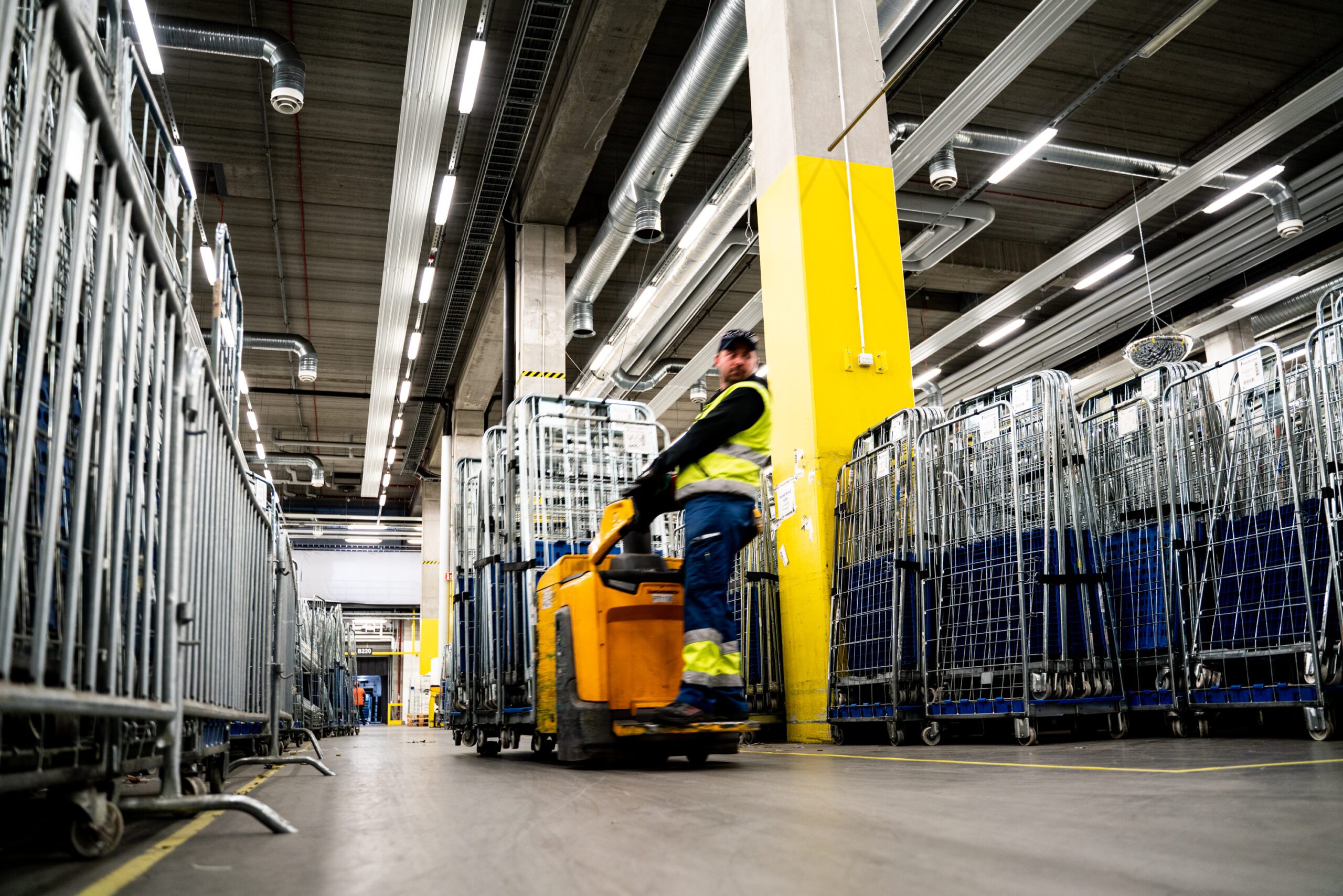
Roll containers are significantly more sustainable than traditional alternatives due to their reusable design and durable construction. Unlike single-use packaging, cardboard boxes, and disposable transport solutions, roll containers can be used thousands of times over many years, dramatically reducing waste generation and resource consumption. Their steel construction and foldable or nestable design optimise storage space while eliminating the need for stretch wrap and disposable packaging materials.
Understanding sustainability in material handling solutions
Sustainability in material handling centres on reducing environmental impact whilst maintaining operational efficiency. Sustainable intralogistics equipment minimises waste, uses durable materials, and optimises resource consumption throughout its lifecycle.
Modern warehouses and logistics operations face increasing pressure to reduce their environmental footprint. This includes minimising packaging waste, reducing energy consumption, and choosing equipment that lasts longer and performs better. Sustainable material handling solutions focus on durability, reusability, and space efficiency.
The shift towards sustainable practices isn’t just environmentally responsible—it’s economically beneficial. Equipment that reduces waste, eliminates disposable packaging, and optimises space utilisation directly impacts operational costs and efficiency.
What makes roll containers more sustainable than traditional alternatives?
Roll containers offer superior sustainability through their multi-use design and robust construction. Unlike cardboard boxes or single-use packaging, roll containers can withstand thousands of transport cycles over many years without replacement.
The key sustainability advantages include:
- Durable steel construction that lasts decades rather than single trips
- Foldable or nestable design that reduces storage space by up to 75%
- Elimination of stretch wrap and protective packaging materials
- Reduced product damage compared to disposable alternatives
Traditional alternatives like cardboard boxes, wooden crates, and plastic wrapping create continuous waste streams. Roll containers break this cycle by providing a permanent transport solution that improves with each use through operational familiarity and process optimisation.
How do roll containers reduce waste in logistics operations?
Roll containers eliminate packaging waste by replacing single-use materials with reusable transport systems. This approach removes the need for cardboard boxes, plastic wrapping, and protective packaging that typically end up in landfills after single use.
The waste reduction occurs through several mechanisms:
- Elimination of stretch foil and protective wrapping materials
- Reduced need for secondary packaging during transport
- Lower product damage rates, minimising waste from damaged goods
- Optimised loading that reduces transport frequency and associated emissions
In retail environments, roll containers enable direct delivery to sales floors, eliminating the unpacking and repackaging steps that generate significant cardboard and plastic waste. This streamlined approach reduces handling time whilst supporting sustainability goals.
What is the environmental impact of roll containers versus other material handling equipment?
Roll containers demonstrate a significantly lower environmental impact through reduced lifecycle resource consumption compared to disposable alternatives. Their steel construction requires higher initial energy input but delivers superior long-term environmental performance.
| Impact Factor | Roll Containers | Disposable Packaging | Plastic Crates |
|---|---|---|---|
| Lifespan | 10-15 years | Single use | 3-5 years |
| Material Waste | Minimal | High | Moderate |
| Space Efficiency | Excellent (foldable/nestable) | Poor | Moderate |
| Recyclability | 100% steel recyclable | Limited | Moderate |
The carbon footprint analysis shows roll containers offsetting their manufacturing emissions within months of use through reduced packaging waste and optimised transport efficiency. Their space-saving design reduces warehouse energy consumption and transport frequency.
Key takeaways for choosing sustainable material handling solutions
Selecting sustainable material handling equipment requires evaluating long-term environmental impact rather than initial costs. Roll containers offer the best combination of durability, waste reduction, and operational efficiency for most logistics applications.
Essential considerations include:
- Choose reusable solutions over disposable alternatives
- Prioritise space-efficient designs that optimise storage and transport
- Select equipment that eliminates secondary packaging requirements
- Consider the complete lifecycle impact, not just initial manufacturing
The transition to sustainable material handling solutions like roll containers supports both environmental goals and operational efficiency. Their proven durability, waste reduction capabilities, and space optimisation make them the preferred choice for organisations committed to sustainable logistics practices.
When evaluating material handling options, consider how each solution impacts your overall waste generation, storage efficiency, and long-term operational costs. Roll containers consistently deliver superior sustainability performance across all these critical factors.
Explore our comprehensive material handling solutions
Ready to enhance your logistics operations with sustainable material handling equipment? Discover our complete range of material handling equipment designed to optimise efficiency whilst supporting your sustainability goals. From roll containers to specialised transport solutions, we offer proven equipment that reduces waste and improves operational performance.
Have questions about implementing sustainable material handling solutions in your operations? Our experts are ready to help you select the right equipment for your specific needs. Contact us today to discuss how our sustainable solutions can transform your logistics operations whilst supporting your environmental objectives.