
In logistics and supply chain operations, cost discussions often focus on upfront investments. Yet for equipment used every day, the true financial impact is determined over its entire life cycle. Roll containers are a good example of how a relatively simple load carrier can deliver measurable long-term savings when evaluated beyond purchase price.
“Investments in new equipment should be treated as a three-step process. The first step is on a concept level: For instance, what are the operational benefits when choosing roll cages over pallets? The second decision is to choose the actual product specifications while keeping the Total Cost of Ownership in mind; high quality means durability and easy maintenance. Finally, the success of the rollout will very much rely on planning carefully, implementing well the transition and giving proper training for the new equipment.”, says Ville Hintsala, head of consulting services at K. Hartwall.
For organisations managing high-volume material flows — from for example retail distribution to parcel services — roll containers can become a real asset rather than just a handling equipment.
Labour efficiency and safer handling
Labour is still typically the biggest cost driver in supply chain operations. Roll containers support faster handling by enabling goods to be moved as consolidated loads, reducing unnecessary re-handling.
Ergonomic designs also contribute to safer working conditions. Fewer injuries and less physical strain help lower indirect costs related to absenteeism and workforce turnover. Those are benefits that are often overlooked in financial calculations.
Transport and storage efficiency that scales
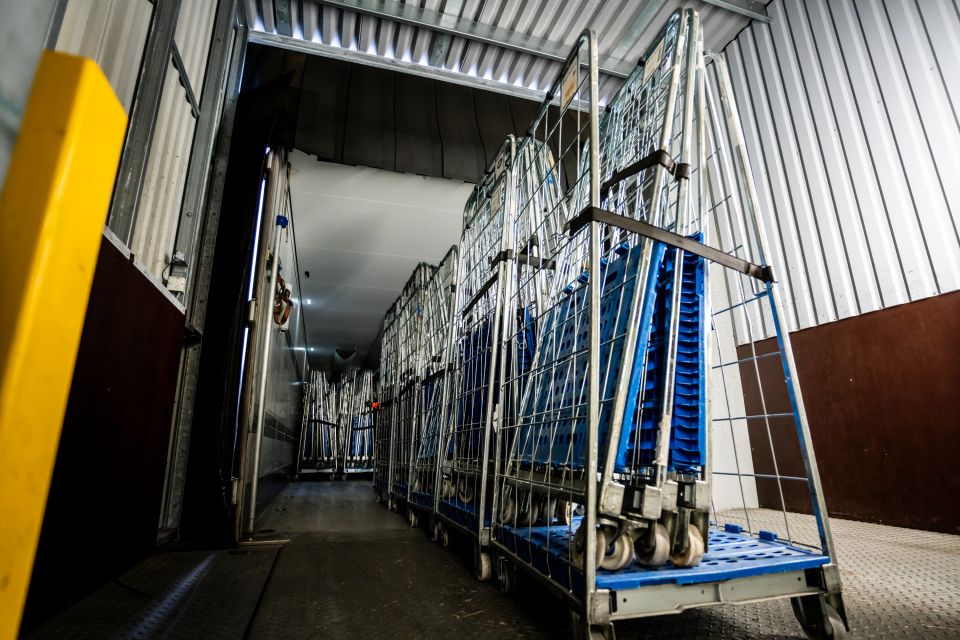
Another often overlooked long-term cost advantage of roll containers lies in space efficiency. A long-time trend of stores demanding smaller drop sizes is in great conflict with large footprint units such as pallets when looking at truck fills and delivery costs. Foldable and nestable designs allow empty units to be compacted, reducing return transport volumes and freeing up warehouse space.
Better truck fill rates and fewer return trips directly impact transportation costs. This represents an increasingly important factor as fuel prices and sustainability requirements continue to rise across supply chains.
Reducing packaging and waste over time
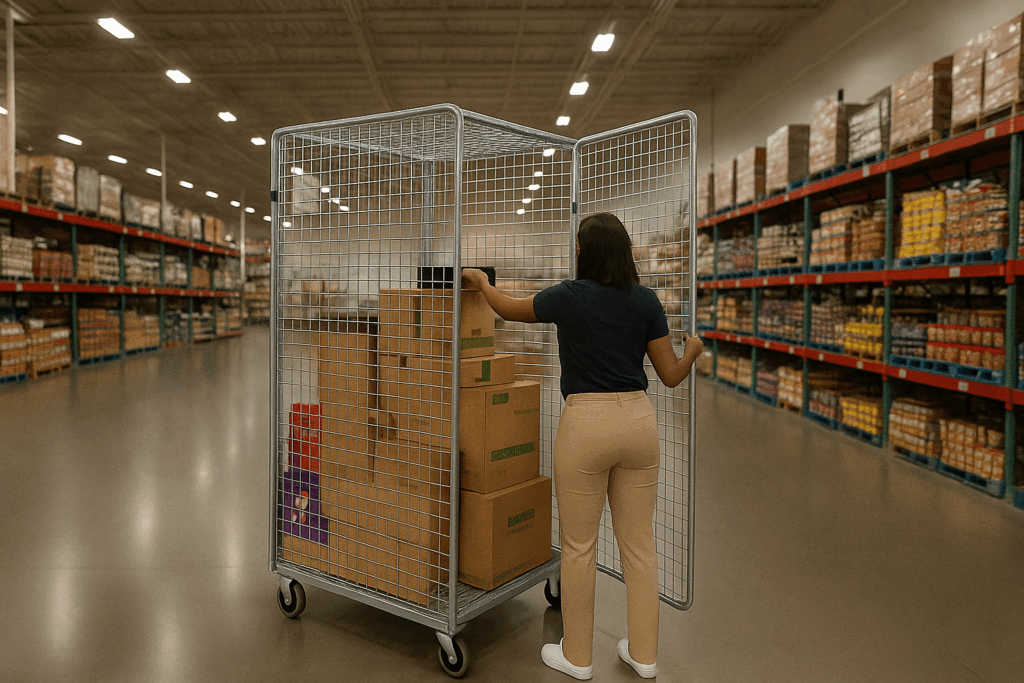
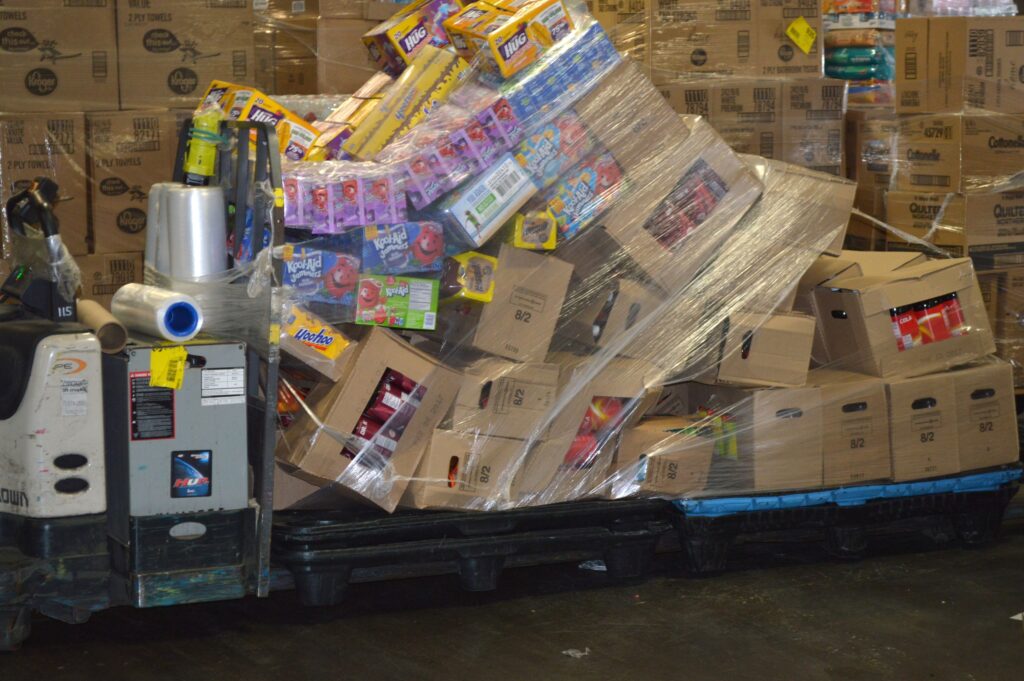
Roll containers or their accessories such as our Add-on door Flex and Add-on door Fold can also reduce the need for disposable packaging materials such as stretch film or single-use pallets in certain flows. For companies under pressure to improve their sustainability performance while maintaining efficiency, innovative and durable roll containers support long-term environmental and economic goals simultaneously.
Looking beyond purchase price
When assessing material handling solutions, total cost of ownership (TCO) provides a more realistic picture than unit price alone. In other words, when purchasing new material handling equipment, one should not only consider the sales price but include to the equation the life length of the solution, the need for repair and maintenance over time, while not forgetting ease of use, damaged goods and ergonomics just to mention a few. For operations with repeatable good flows these factors add up quickly.
A strategic choice for resilient supply chains
In the age of AI and humanoid robots filling the news, it is easy to forget that majority of warehouses are still run manually. Roll containers are the best-fit solution for both worlds as they are the most efficient way for manual handling while supporting automatic handling with AMRs, conveyor belts and different types of material handling equipment. High-quality roll containers ensure safe manual handling, but also much more reliable automatic handling compared to wooden or plastic pallets.
Rather than being a short-term cost decision, roll containers should be a strategic investment in operational resilience and efficiency.