




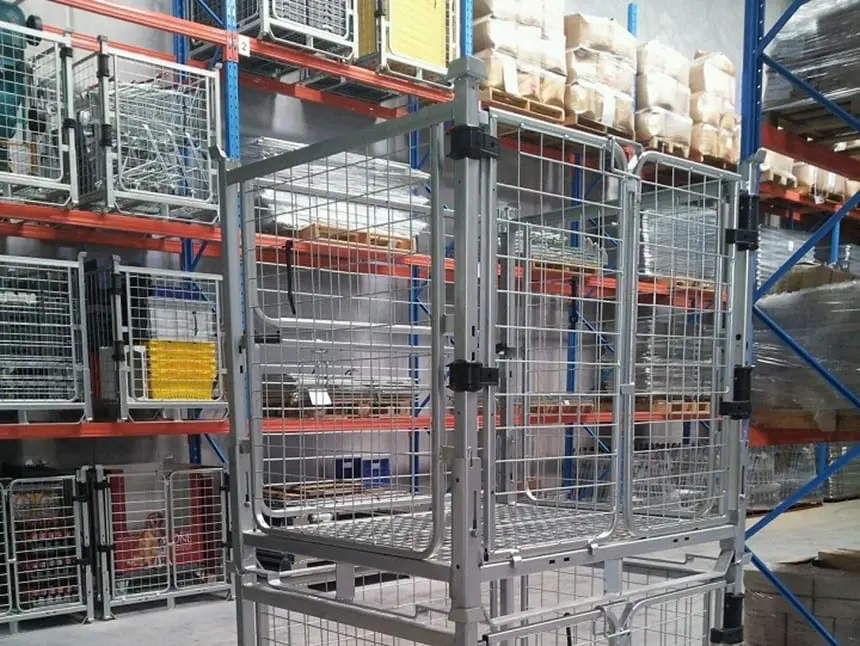
Foldable cages significantly improve workforce productivity by reducing physical strain, optimising warehouse space, and streamlining material handling processes. These collapsible storage solutions enable workers to handle goods more efficiently whilst minimising manual labour requirements. Their ergonomic design and space-saving capabilities translate directly into faster operations, reduced handling time, and improved overall workplace efficiency across various logistics environments.
Understanding foldable cages and their role in modern logistics
Foldable cages represent a fundamental shift in material handling technology, offering collapsible storage solutions that adapt to varying operational demands. These versatile containers combine the security of traditional cages with the space efficiency of foldable designs, making them essential tools in contemporary intralogistics operations.
The basic functionality centres around their ability to collapse when empty, dramatically reducing storage footprint whilst maintaining structural integrity when loaded. This dual-state capability makes them particularly valuable in retail distribution, food manufacturing, and industrial production environments where space optimisation directly impacts operational costs.
Modern foldable cages integrate seamlessly into existing warehouse management systems, supporting automated sorting processes and manual handling operations alike. Their mesh construction provides excellent product visibility, reducing picking errors and improving inventory accuracy throughout the supply chain.
What are the main ergonomic benefits of foldable cages for workers?
Foldable cages deliver substantial ergonomic improvements by reducing physical strain through proper height design and enhanced manoeuvrability. Workers experience less back strain as goods are positioned at optimal handling heights, eliminating excessive bending and reaching motions common with traditional storage methods.
The lightweight construction of foldable cages, combined with smooth-rolling wheel systems, enables effortless movement of heavy loads. This reduces the physical demands on workers compared to lifting individual items or manoeuvring rigid containers. The ergonomic benefits extend to loading and unloading processes, where the cage design facilitates natural body movements.
Easy folding mechanisms require minimal force to operate, allowing workers to quickly collapse empty cages without straining wrists or shoulders. This design consideration becomes particularly important in high-volume operations where cage handling occurs frequently throughout shifts.
How do foldable cages optimise warehouse space utilisation?
Space optimisation occurs through the dramatic reduction in storage footprint when cages are collapsed, with space savings of up to 75% compared to rigid alternatives. This efficiency directly translates to enhanced worker productivity as more floor space becomes available for operational activities.
Improved storage density allows warehouses to accommodate more equipment within existing facilities, reducing the need for workers to travel longer distances between storage areas. The compact storage of empty cages creates cleaner, more organised work environments that support faster movement and reduced congestion.
The stackable nature of collapsed cages enables vertical storage solutions that maximise cubic space utilisation. This three-dimensional approach to storage creates more efficient workflows, allowing workers to access equipment quickly without navigating through cluttered areas.
Why do foldable cages reduce material handling time?
Material handling time decreases significantly due to streamlined loading processes and improved accessibility to goods within the cage structure. The open mesh design allows workers to quickly identify and access specific items without unpacking entire containers, reducing search and retrieval times.
Setup time is minimised as foldable cages deploy quickly from their collapsed state, ready for immediate use. This rapid deployment capability is particularly valuable in fast-paced distribution environments where time efficiency directly impacts throughput rates.
The standardised dimensions of foldable cages facilitate consistent handling procedures, reducing the learning curve for workers and enabling faster processing speeds. Compatibility with existing handling equipment, such as dollies and conveyor systems, eliminates time-consuming transfers between different container types.
What maintenance advantages do foldable cages offer for productivity?
Foldable cages provide low-maintenance operation through durable construction and simplified cleaning processes that minimise operational downtime. The open mesh design allows easy access for cleaning and inspection, reducing the time required for hygiene maintenance in food and pharmaceutical applications.
Robust materials and reinforced stress points ensure extended service life with minimal repair requirements. This durability translates to consistent availability of equipment, preventing productivity losses due to equipment failures or maintenance schedules.
The modular design of many foldable cages enables quick replacement of individual components rather than entire units, reducing maintenance costs and downtime. Simple mechanical systems with fewer moving parts require less specialised maintenance knowledge, allowing operational staff to perform basic upkeep tasks.
Key takeaways for implementing foldable cages in your operation
Successful implementation of foldable cages requires careful consideration of operational workflows and space constraints to maximise productivity benefits. The primary advantages include reduced physical strain on workers, optimised space utilisation, faster material handling, and minimal maintenance requirements.
Consider the specific load requirements and handling frequency in your operation when selecting cage specifications. The mesh structure provides excellent product visibility, which particularly benefits operations requiring frequent inventory checks or quality inspections.
Integration with existing lean logistics principles enhances the overall efficiency gains. Foldable cages support waste reduction goals by eliminating unnecessary packaging materials whilst improving space utilisation and reducing manual handling requirements. The combination of ergonomic benefits and operational efficiency makes foldable cages a valuable investment in workforce productivity and sustainable logistics operations.
Discover our comprehensive material handling solutions
Ready to transform your warehouse operations with high-quality foldable cages and other innovative material handling equipment? Explore our extensive range of solutions designed to boost productivity and streamline your logistics processes. Visit our material handling equipment collection to discover products that can revolutionise your operational efficiency.
Have questions about implementing foldable cages in your specific operation? Our expert team is ready to provide personalised guidance and support. Contact us today to discuss your requirements and find the perfect material handling solutions for your business needs.