




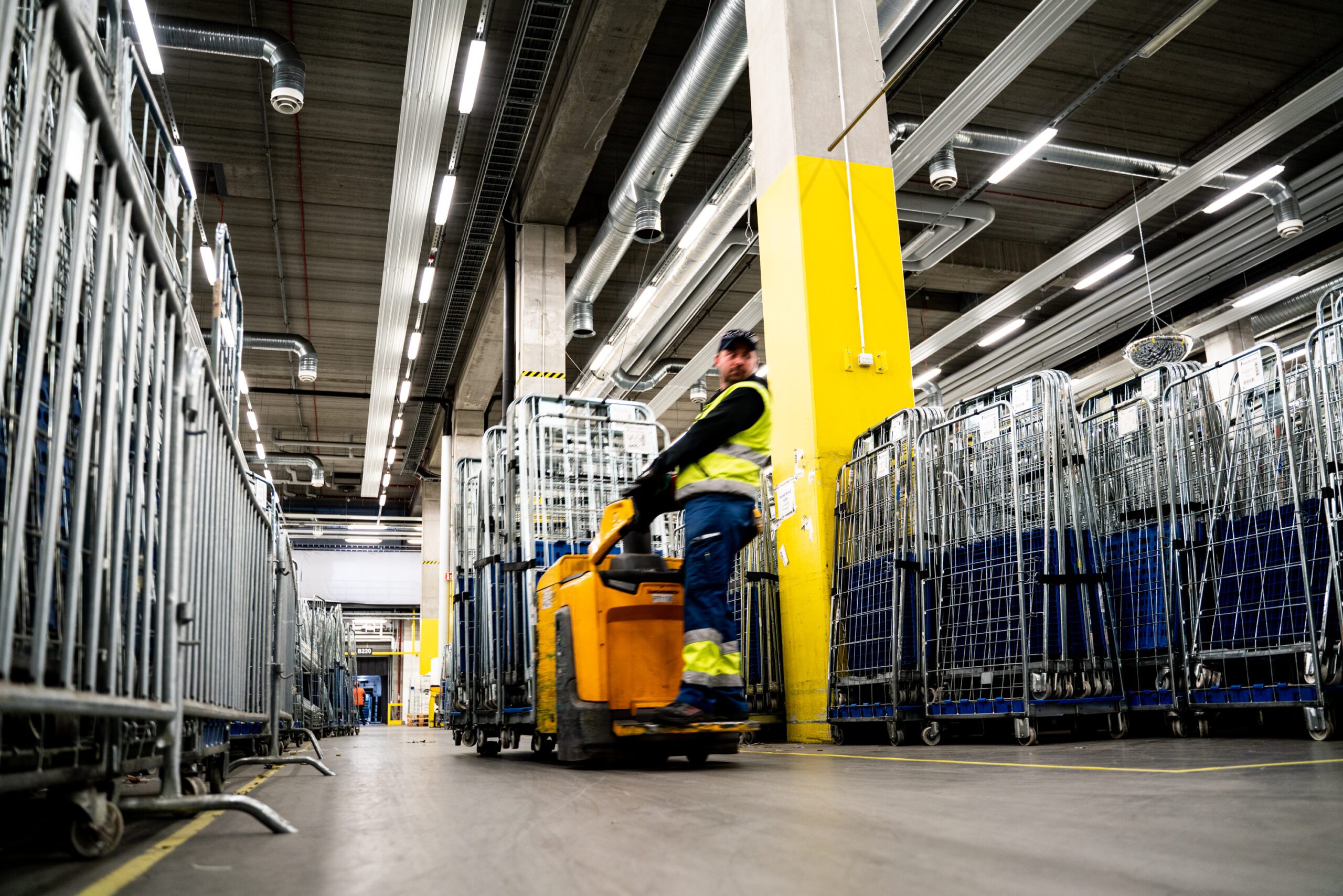
Roll containers maximise storage space through their stackable design, nesting capabilities when empty, and efficient vertical utilisation. Unlike fixed shelving systems, these mobile storage solutions eliminate the need for wide aisles whilst providing flexible positioning throughout warehouse and retail environments. Their wheeled design enables dense storage configurations and quick reconfiguration as operational needs change.
Understanding roll containers and their space-saving potential
Roll containers represent a fundamental shift in material handling efficiency, combining mobility with intelligent space utilisation. These wheeled storage units feature robust frames with multiple sides and shelving options, designed to move seamlessly through logistics operations whilst maximising every cubic metre of available space.
The core principle behind roll containers lies in their modular design. Available in 2, 3, and 4-sided configurations, they can be customised with different frame options to suit specific storage requirements. This adaptability means businesses can optimise their storage density without compromising accessibility or operational flow.
Modern roll containers integrate seamlessly into intralogistics systems, supporting both manual operations and automated conveyor systems. Their standardised dimensions ensure compatibility across different warehouse management systems whilst their durable construction maintains consistent performance under demanding operational conditions.
How do roll containers optimise vertical storage space?
Roll containers excel at vertical space optimisation through their inherent stackable design and intelligent nesting capabilities. When loaded, multiple units can be safely stacked to utilise full ceiling height, whilst empty containers nest within each other to minimise storage footprint by up to 75%.
The stackable functionality transforms warehouse vertical space into productive storage area. Unlike traditional static shelving that requires predetermined heights, roll containers adapt to varying product dimensions whilst maintaining structural integrity. This flexibility proves particularly valuable in environments with fluctuating inventory levels or seasonal storage demands.
Nesting capabilities provide exceptional space efficiency during return logistics. Empty foldable roll containers collapse into compact configurations, enabling more units to fit within the same transport space. This feature significantly reduces empty container storage requirements and transportation costs, creating a more sustainable logistics cycle.
| Storage Method | Vertical Efficiency | Empty Storage | Flexibility |
|---|---|---|---|
| Roll Containers | Full height utilisation | 75% space reduction | Reconfigurable |
| Fixed Shelving | Predetermined levels | Constant footprint | Static positioning |
| Standard Pallets | Limited stacking | Full space requirement | Forklift dependent |
What makes roll containers more space-efficient than traditional storage methods?
Roll containers eliminate the spatial constraints of traditional storage by removing the need for wide forklift aisles and fixed storage locations. Their wheeled design enables dense storage configurations with narrow pathways, increasing usable storage area by up to 30% compared to conventional pallet systems.
The mobility advantage extends beyond mere space savings. Roll containers can be positioned precisely where needed, eliminating the dead space typically required around static shelving units. This flexibility allows warehouse managers to reconfigure storage layouts quickly in response to changing inventory patterns or seasonal demands.
Accessibility improvements contribute significantly to space efficiency. Unlike palletised storage that requires clear overhead space for forklift operation, roll containers enable ground-level access from multiple sides. This eliminates the need for specialised handling equipment in many applications, freeing up space previously reserved for machinery movement.
The ergonomic benefits translate into operational space savings as well. Workers can manoeuvre roll containers through standard doorways and tight spaces, reducing the infrastructure modifications typically required for traditional material handling systems. This adaptability proves particularly valuable in retail environments where space optimisation directly impacts profitability.
Key takeaways for maximising storage space with roll containers
Successful roll container implementation requires careful consideration of your specific operational requirements and spatial constraints. The choice between foldable and nestable models depends on your return logistics patterns and empty container storage capabilities.
Consider these essential factors when selecting roll containers for space optimisation:
- Evaluate your vertical space utilisation potential and ceiling height constraints
- Assess the frequency of empty container returns to determine nesting benefits
- Analyse current aisle width requirements and potential space reclamation
- Consider integration with existing warehouse management systems
The greatest space savings emerge from combining multiple roll container features strategically. Utilising both vertical stacking capabilities and horizontal nesting creates compound efficiency gains that traditional storage methods cannot match.
Implementation success depends on proper planning and gradual integration. Start with high-turnover areas where space constraints are most acute, then expand the system as operational familiarity increases. This approach ensures maximum benefit realisation whilst minimising disruption to existing workflows.
Regular assessment of your roll container configuration ensures continued space optimisation as business needs evolve. The inherent flexibility of these systems means adjustments can be made without significant capital investment, providing long-term adaptability in dynamic logistics environments.
Explore our complete material handling solutions
Ready to transform your warehouse efficiency with professional-grade roll containers? Discover our comprehensive range of material handling equipment designed to maximise your storage space and streamline operations. From stackable roll containers to specialised logistics solutions, our products deliver the space-saving benefits your business needs.
Don’t let inefficient storage limit your potential. Contact our specialists today to discuss your specific requirements and discover how the right roll container solution can optimise your space utilisation and boost operational efficiency.