




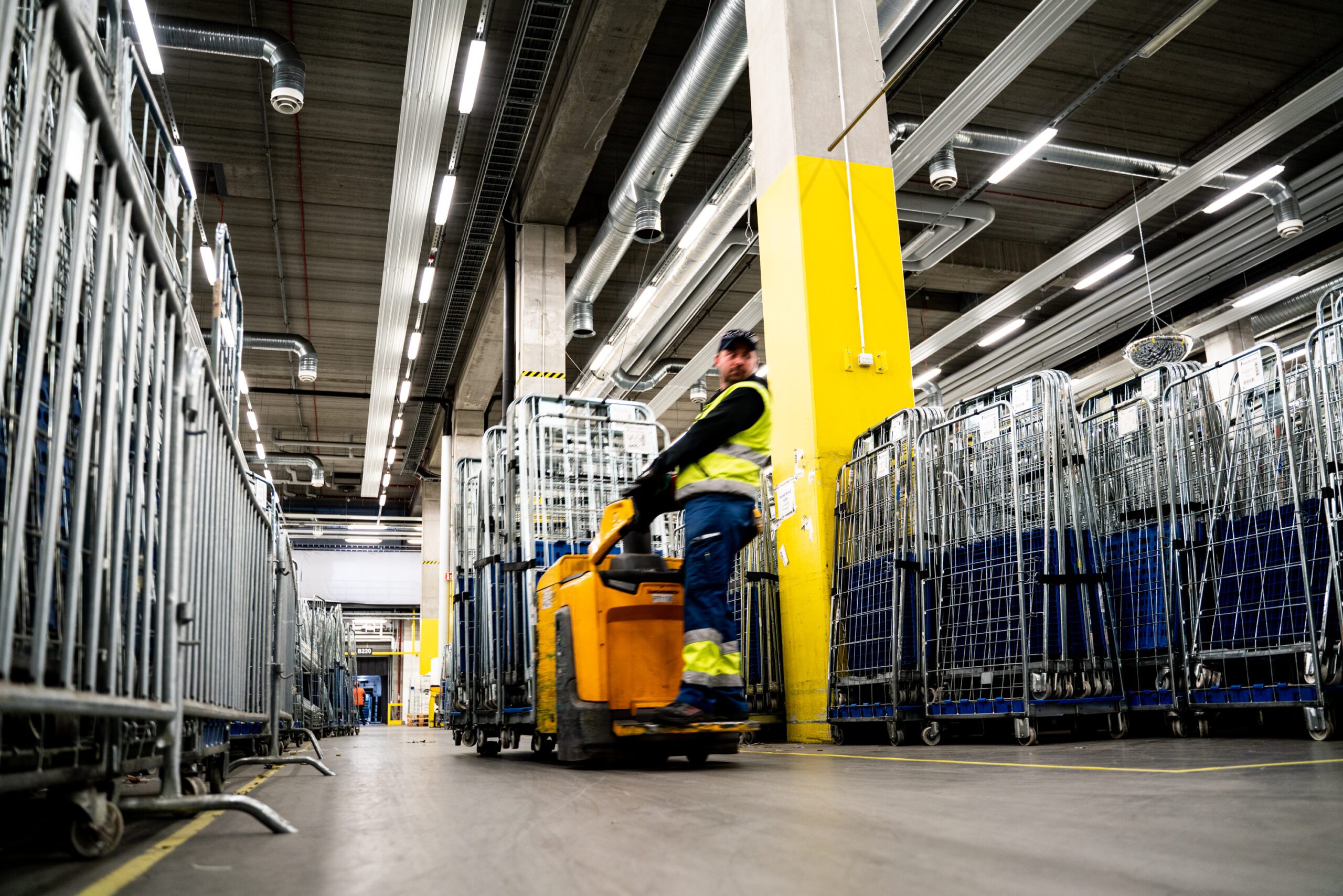
Roll containers work through a simple yet effective design that combines a sturdy frame structure with smooth-rolling wheels, enabling workers to transport goods efficiently throughout warehouses and retail environments. The wheeled base system allows for easy manoeuvrability whilst the frame construction provides secure containment for various products during transport.
Understanding roll containers in modern logistics
Roll containers serve as essential material handling equipment in today’s fast-paced logistics operations. These versatile units bridge the gap between stationary storage and mobile transport, enabling seamless movement of goods from warehouse to shop floor.
In intralogistics operations, roll containers function as the backbone of efficient material flow. They eliminate the need for multiple handling steps, reducing both labour costs and the risk of product damage. Understanding their functionality becomes crucial when designing logistics systems that prioritise both efficiency and ergonomics.
Modern supply chains rely heavily on these units because they adapt to various environments. Whether navigating narrow retail aisles or moving through automated conveyor systems, roll containers maintain their effectiveness across different operational contexts.
How does a roll container work?
The fundamental operation of roll containers centres on their wheel system mechanics combined with ergonomic design principles. Four swivel castors mounted on the base frame enable 360-degree manoeuvrability, allowing operators to navigate tight spaces with minimal effort.
The frame construction typically features welded steel or aluminium components that distribute weight evenly across the base. This design prevents stress concentration points that could lead to structural failure during heavy loading or frequent use.
Loading mechanisms vary depending on the container type. Two-sided versions allow front loading, whilst three and four-sided models require top loading. The open design facilitates quick product identification and reduces picking errors during order fulfilment operations.
The smooth transportation principle relies on proper wheel bearing maintenance and appropriate floor surfaces. Quality castors feature sealed bearings that resist dirt and moisture, ensuring consistent performance across different warehouse environments.
What are the main components of a roll container?
The base frame forms the foundation of every roll container, constructed from robust materials to support substantial weight loads whilst maintaining structural integrity during transport and storage operations.
| Component | Function | Material Options |
|---|---|---|
| Base Frame | Weight distribution and structural support | Steel, aluminium |
| Side Panels | Product containment and visibility | Mesh, solid steel |
| Wheels | Mobility and manoeuvrability | Rubber, polyurethane |
| Handles | Ergonomic control and steering | Steel tubing |
Side panels provide product containment whilst maintaining visibility for inventory management. Mesh construction offers excellent product visibility, reducing delivery errors and simplifying stock verification processes.
Wheel assemblies typically feature high-quality castors with appropriate load ratings. The selection between rubber and polyurethane wheels depends on floor surface conditions and noise requirements in the operational environment.
Optional features include removable doors for secure transport, adjustable shelving systems for versatile storage configurations, and identification systems for tracking and inventory management purposes.
Why are roll containers important in warehouse operations?
Roll containers significantly improve workplace ergonomics by reducing manual lifting requirements and enabling workers to transport larger quantities of goods with less physical strain, contributing to safer working conditions.
Space efficiency represents another crucial benefit. Nestable designs allow empty containers to stack inside one another, reducing storage footprint by up to 75% compared to fixed-size alternatives. Foldable versions offer similar space savings with different operational characteristics.
These units support lean logistics principles by eliminating unnecessary handling steps. Products can remain in the same container from warehouse picking through to retail display, reducing labour costs and minimising damage risks throughout the supply chain.
The reduction in manual handling translates directly to operational cost savings. Workers can move more products per hour whilst experiencing less fatigue, improving overall productivity and reducing workplace injury risks.
What is the difference between roll containers and other material handling equipment?
Roll containers offer distinct advantages over traditional pallets and trolleys through their combination of mobility, containment, and space efficiency in a single unit designed for diverse operational requirements.
Compared to standard pallets, roll containers provide superior product protection through enclosed sides and eliminate the need for additional handling equipment like forklifts for basic transport operations. This makes them ideal for retail environments where forklift access is limited.
Unlike basic trolleys or carts, roll containers offer standardised dimensions that integrate seamlessly with existing warehouse systems. Their robust construction handles heavier loads whilst maintaining the manoeuvrability advantages of smaller cart systems.
The key differentiator lies in their dual functionality as both transport and storage units. Whilst other equipment typically serves single purposes, roll containers adapt to various roles throughout the logistics process, from warehouse picking to retail display.
Key takeaways about roll container functionality
Roll containers operate through proven mechanical principles that combine mobility and containment in versatile units suitable for diverse logistics applications across retail, manufacturing, and distribution environments.
Their practical applications extend beyond simple transport to encompass storage, display, and order fulfilment functions. This versatility makes them valuable investments for operations seeking to streamline material handling processes whilst improving workplace ergonomics.
The importance of roll containers in creating efficient intralogistics solutions cannot be overstated. They represent a fundamental building block for modern supply chains that prioritise both operational efficiency and worker safety.
Understanding these functional principles enables logistics professionals to make informed decisions about material handling equipment selection, ultimately contributing to more effective and sustainable warehouse operations.
Explore our complete material handling solutions
Ready to enhance your warehouse operations with professional-grade roll containers and material handling equipment? Discover our comprehensive range of solutions designed to optimise your logistics processes and improve workplace efficiency.
Explore our full product range to find the perfect material handling equipment for your specific operational requirements.
Our expert team is ready to help you select the ideal roll containers and logistics solutions for your business needs. Contact us today to discuss your material handling requirements and discover how our products can transform your warehouse operations.