




Companies can save between 30-70% on storage costs by implementing foldable cages in their warehouse operations. These space-efficient solutions reduce warehouse rental expenses, lower transportation costs, and improve labour efficiency by collapsing to a fraction of their operational size when empty, allowing businesses to store more units in the same space whilst minimising return logistics costs.
Understanding Storage Cost Challenges in Modern Logistics
Modern logistics operations face mounting pressure from rising warehouse rental costs, limited storage space, and increasing demand for efficient material handling solutions. Traditional rigid storage containers occupy valuable warehouse real estate even when empty, creating unnecessary overhead expenses that directly impact profitability.
The challenge becomes particularly acute during peak seasons when businesses need maximum storage capacity, yet face constraints during off-peak periods when empty containers still consume expensive warehouse space. This inefficiency drives up operational costs and reduces the flexibility needed in today’s dynamic supply chain environment.
Space optimisation has become a critical factor in maintaining competitive advantage, especially as warehouse rental costs continue to escalate in urban areas where proximity to customers matters most. Companies require solutions that adapt to fluctuating storage demands whilst maintaining operational efficiency.
What Are Foldable Cages and How Do They Work?
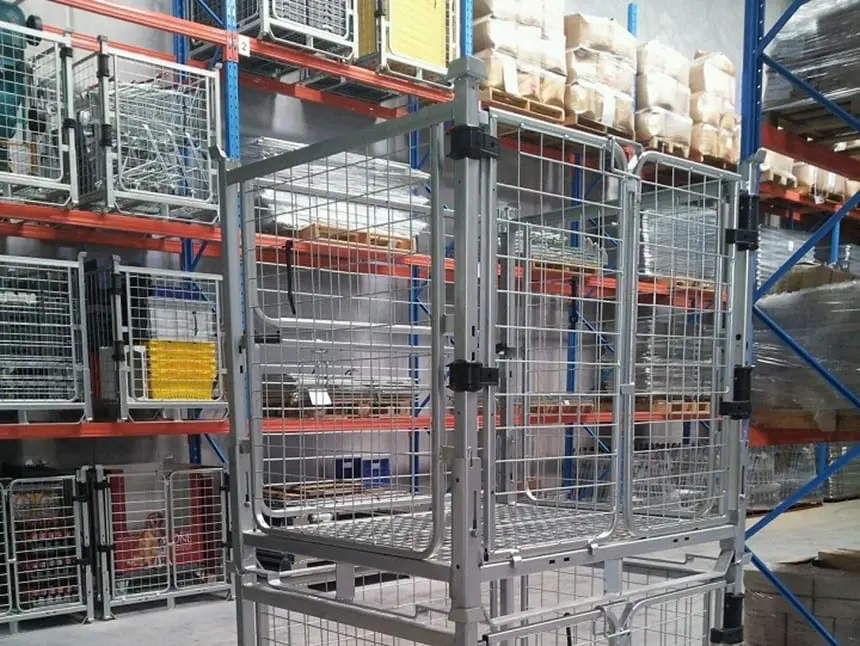
Foldable cages are collapsible storage containers designed with hinged sides and removable components that allow them to fold flat when not in use. These innovative storage solutions feature robust metal construction with mesh sides that provide excellent product visibility whilst maintaining structural integrity during transport and storage.
The folding mechanism typically involves releasing simple locking mechanisms that allow the sides to collapse inward, reducing the container’s height by up to 75%. This design enables easy setup and breakdown without requiring tools or specialised training, making them practical for everyday warehouse operations.
Key features include stackable design for efficient storage, ergonomic handles for safe manual handling, and standardised dimensions that integrate seamlessly with existing warehouse equipment. The mesh structure ensures proper ventilation and product visibility, reducing picking errors and improving inventory management accuracy.
How Much Warehouse Space Can Foldable Cages Save?
Foldable cages can reduce storage space requirements by 60-75% when collapsed compared to their operational configuration. This dramatic space reduction translates directly into lower warehouse rental costs and improved storage density for businesses of all sizes.
When operational, a standard foldable cage might measure 800mm x 600mm x 1200mm, but when collapsed, the same unit reduces to approximately 800mm x 600mm x 300mm. This space efficiency allows companies to store significantly more empty containers in the same footprint, reducing the need for additional warehouse space.
The space savings become particularly valuable during return logistics, where empty containers would otherwise consume substantial transport and storage capacity. Companies can stack multiple collapsed cages in the space previously occupied by a single operational unit, dramatically improving storage density and reducing associated costs.
What Factors Determine Storage Cost Savings with Foldable Cages?
Several key variables influence the total cost savings achievable through foldable cage implementation, with warehouse rental costs, labour efficiency improvements, and transportation optimisation being the primary factors.
Warehouse rental costs represent the most significant savings opportunity, as reduced space requirements directly translate to lower monthly rental expenses. Companies operating in high-cost urban locations see the greatest benefit, where every square metre of saved space delivers substantial financial returns.
Labour efficiency improvements occur through reduced handling time, easier storage management, and simplified inventory processes. The ergonomic design and stackable nature of foldable cages reduce manual handling requirements whilst improving worker safety and productivity.
Transportation cost reductions emerge from the ability to transport more collapsed units per shipment, reducing return logistics expenses and improving vehicle utilisation rates. This factor becomes particularly important for businesses with high container turnover rates or extensive distribution networks.
How Do You Calculate the ROI of Foldable Cage Implementation?
Calculating return on investment for foldable cages involves comparing the initial purchase cost against ongoing savings in storage, transportation, and labour expenses. The typical payback period ranges from 12-24 months depending on usage intensity and operational scale.
Begin by quantifying current storage costs, including warehouse rental expenses allocated to container storage, transportation costs for empty container returns, and labour hours spent managing storage operations. These baseline figures provide the foundation for measuring improvement.
Next, calculate projected savings based on space reduction percentages, improved transportation efficiency, and reduced labour requirements. Factor in the durability and lifespan of foldable cages, which typically exceed five years with proper maintenance, to determine long-term financial benefits.
Consider additional value factors such as reduced product damage, improved inventory accuracy, and enhanced operational flexibility when evaluating the complete ROI picture. These benefits often justify the investment even when direct cost savings alone provide attractive returns.
Key Takeaways for Maximising Storage Cost Savings
Successful implementation of foldable cages requires careful planning, proper staff training, and integration with existing warehouse management systems. Companies achieve the greatest savings when they optimise their entire storage and handling processes around the unique capabilities of collapsible containers.
Focus on high-turnover applications where the folding capability provides maximum benefit, such as retail distribution, food service delivery, and manufacturing supply chains. These environments offer the greatest opportunity for space and cost optimisation through reduced empty container handling.
Regular monitoring and measurement of key performance indicators ensures continued optimisation and identifies opportunities for further improvement. Track metrics such as storage density, handling time, and transportation efficiency to maximise the long-term value of your foldable cage investment.
Discover Our Complete Material Handling Solutions
Foldable cages represent just one element of a comprehensive material handling strategy. To explore our full range of storage solutions, transport equipment, and warehouse optimisation products, visit our complete material handling equipment portfolio.
Ready to transform your storage operations and start saving on warehouse costs? Our material handling experts are here to help you design the perfect solution for your specific requirements. Contact our team today to discuss how foldable cages and our other innovative products can optimise your logistics operations and deliver measurable cost savings.