




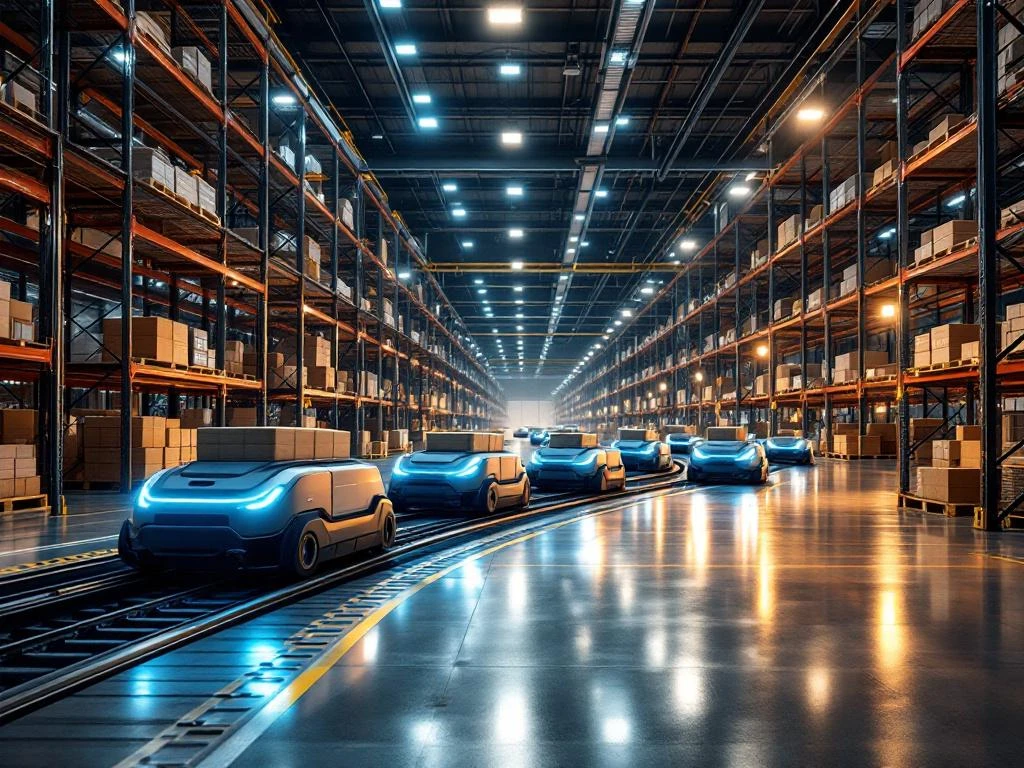
Automated logistics systems offer transformative benefits including increased operational efficiency, reduced labour costs, improved accuracy, enhanced safety, and 24/7 operational capability. These systems encompass autonomous mobile robots, tugger trains, and automated material handling solutions that optimise warehouse operations, minimise human error, and create scalable, future-ready logistics operations that significantly enhance competitiveness.
Understanding automated logistics systems and their impact
Automated logistics systems represent a comprehensive approach to modernising warehouse and distribution operations through intelligent technology integration. These systems encompass autonomous mobile robots (AMRs and AGVs), tugger train systems, and automated material handling solutions that work together to transform traditional logistics operations.
The core components of logistics automation solutions include robotic systems that navigate independently through facilities, automated guided vehicles that follow predetermined paths, and sophisticated material handling equipment that reduces manual intervention. These technologies integrate seamlessly with existing warehouse management systems to create intelligent, responsive logistics environments.
The transformation impact extends beyond simple task automation. Modern automated systems fundamentally reshape how materials flow through facilities, enabling real-time optimisation of routes, inventory management, and resource allocation whilst reducing dependency on manual labour.
What are the main benefits of implementing automated logistics systems?
The primary benefits of implementing automated logistics systems include dramatically increased operational efficiency, substantial reductions in labour costs, enhanced accuracy in order fulfilment, improved workplace safety, unlimited scalability potential, and continuous 24/7 operational capability without fatigue-related performance degradation.
| Benefit Category | Key Advantages | Impact on Operations |
|---|---|---|
| Operational Efficiency | Optimised material flows, reduced cycle times, elimination of bottlenecks | Consistent processing at optimal speeds without performance variations |
| Cost Reduction | Decreased labour dependency, reduced training requirements, minimised errors | Lower operational costs and reduced need for costly corrections |
| Safety Improvements | Removal of workers from hazardous environments, reduced repetitive strain | Fewer workplace injuries and improved safety compliance |
| Scalability | Dynamic capacity adjustment, no hiring complexities during peak periods | Flexible response to demand fluctuations without staffing challenges |
| 24/7 Operations | Continuous operation without fatigue, consistent performance | Maximised facility utilisation and increased throughput capacity |
Operational efficiency improvements manifest through optimised material flows, reduced cycle times, and elimination of bottlenecks that commonly occur in manual operations. Automated systems process tasks consistently at optimal speeds without breaks or performance variations.
Cost reduction occurs through decreased dependency on manual labour, reduced training requirements, and minimised errors that typically require costly corrections. Safety improvements result from removing workers from potentially hazardous environments and reducing repetitive strain injuries associated with manual material handling.
Scalability advantages allow businesses to adjust operational capacity dynamically based on demand fluctuations without the complexities of hiring, training, or managing additional staff during peak periods.
How do automated systems improve warehouse efficiency and productivity?
Automated systems improve warehouse efficiency by optimising material flows, reducing waste, minimising human error, accelerating processing speeds, and enabling superior space utilisation through intelligent routing and storage strategies that maximise facility capacity.
Material flow optimisation occurs through real-time analysis of warehouse operations, allowing systems to identify the most efficient paths for material movement. This reduces congestion, eliminates unnecessary travel time, and ensures optimal resource utilisation throughout the facility.
Error reduction happens through precise positioning systems, barcode scanning, and automated verification processes that virtually eliminate picking mistakes, incorrect deliveries, and inventory discrepancies. Space utilisation improvements result from intelligent storage algorithms that maximise vertical space usage and optimise storage density.
Processing speed increases come from continuous operation capabilities, parallel task execution, and elimination of manual handling delays that typically slow traditional warehouse operations.
What types of automated logistics solutions are available for different industries?
Available automated logistics solutions include autonomous mobile robots for flexible material transport, tugger train systems for high-capacity movements, automated material handling equipment for specific tasks, and integrated systems designed to serve retail, manufacturing, food production, and logistics industries with customised functionality.
| Solution Type | Best Suited Industries | Key Applications |
|---|---|---|
| Autonomous Mobile Robots | Retail, E-commerce, Manufacturing | Flexible material transport, order picking, inventory management |
| Tugger Train Systems | Manufacturing, Automotive, Heavy Industry | High-capacity bulk material movement, assembly line feeding |
| Automated Material Handling | Food Production, Pharmaceuticals, Logistics | Specialised handling, hygiene compliance, temperature control |
| Integrated Systems | Multi-industry, Large-scale Operations | Comprehensive automation, customised workflows, scalable solutions |
Autonomous mobile robots offer versatility for diverse applications, navigating dynamically through facilities whilst adapting to changing layouts and requirements. Tugger train systems provide ergonomic alternatives to forklift operations, supporting lean logistics principles through efficient bulk material movement.
Industry-specific solutions address unique requirements across sectors. Retail operations benefit from automated order picking and sorting systems, whilst manufacturing facilities utilise automated assembly line feeding and finished goods handling. Food production environments require specialised hygiene-compliant systems with temperature control capabilities.
Logistics automation solutions can be customised to meet specific operational requirements, ensuring optimal performance across different facility types and operational challenges.
How do automated logistics systems reduce operational costs?
Automated logistics systems reduce operational costs through decreased labour dependency, eliminated errors and rework, optimised energy consumption, minimised product damage, improved inventory management, and reduced facility space requirements through efficient utilisation strategies.
Labour cost reductions occur through automation of repetitive tasks, elimination of manual material handling positions, and reduced supervision requirements. Energy optimisation happens through intelligent routing that minimises travel distances and efficient charging systems for automated equipment.
Product damage reduction results from gentle, consistent handling by automated systems that eliminate human handling errors. Inventory management improvements include real-time tracking, automated stock level monitoring, and reduced carrying costs through optimised storage strategies.
Facility cost savings emerge from maximised space utilisation, reduced need for expansion, and lower insurance premiums due to improved safety records associated with automated operations.
Key takeaways for implementing automated logistics systems
Essential benefits of automated logistics systems include enhanced operational efficiency, reduced costs, improved accuracy, and scalability. Successful implementation requires careful planning, process analysis, and customised solutions that align with specific operational requirements whilst creating sustainable, future-ready logistics operations.
Implementation considerations include assessing current processes, identifying automation opportunities, and developing phased deployment strategies that minimise operational disruption. The most successful automated systems integrate seamlessly with existing operations whilst providing flexibility for future expansion.
Creating competitive advantages through automation requires focusing on solutions that address specific operational challenges whilst building foundations for continuous improvement and adaptation to evolving market demands.
Explore Our Complete Material Handling Solutions
Ready to transform your logistics operations? Discover our comprehensive range of automated material handling equipment designed to enhance efficiency, reduce costs, and improve safety across your facility. From autonomous mobile robots to tugger train systems, our solutions are engineered to meet the diverse needs of modern logistics operations.
View our complete product portfolio to find the perfect automation solution for your specific requirements.
Get Expert Guidance for Your Automation Journey
Take the next step towards optimising your logistics operations. Our experienced team is ready to help you assess your current processes, identify automation opportunities, and develop a customised solution that delivers measurable results.
Contact our automation specialists today to discuss how automated logistics systems can transform your operations and drive competitive advantage in your industry.