




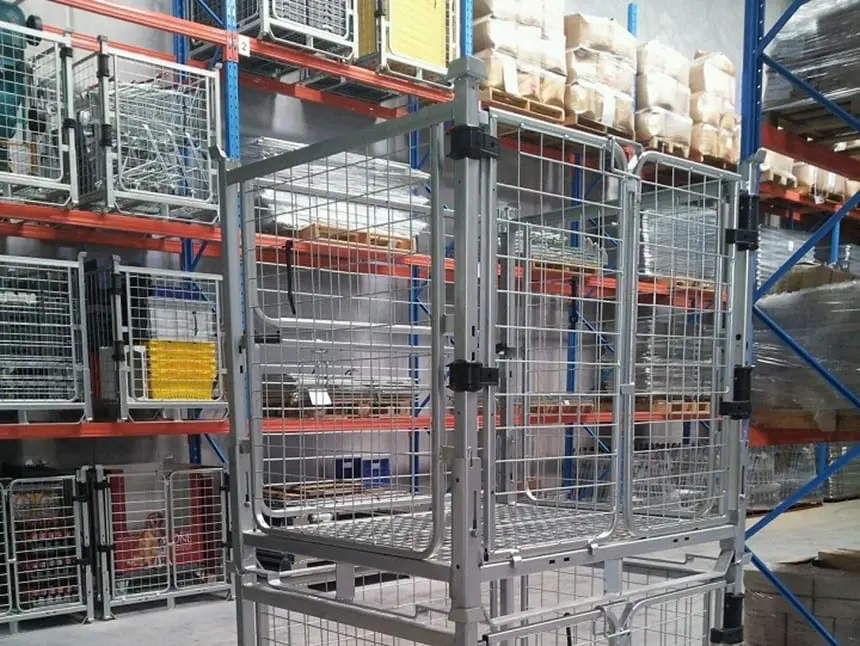
Foldable cages offer significant benefits for warehouse efficiency by maximising space utilisation, reducing storage costs, and improving operational flexibility. These innovative material handling solutions can collapse to a fraction of their operational size when not in use, allowing warehouses to store more equipment in less space whilst enhancing workflow efficiency through faster setup and breakdown processes.
Understanding foldable cages in modern warehouse operations
Foldable cages represent a revolutionary approach to material handling in contemporary intralogistics operations. These versatile storage solutions address the persistent challenges that warehouses face, particularly space constraints and operational inefficiencies that can significantly impact productivity and profitability.
Modern warehouses operate under increasing pressure to maximise every square metre of available space whilst maintaining efficient workflows. Traditional rigid storage equipment often creates bottlenecks when not in use, occupying valuable floor space that could be utilised for other operations. Foldable cages solve this problem by providing the structural integrity needed during active use whilst collapsing to minimal dimensions when storage is complete.
The integration of foldable cage technology into warehouse operations supports lean logistics principles by reducing waste in space utilisation and improving overall material flow efficiency. These solutions complement other intralogistics equipment and can be seamlessly incorporated into existing warehouse management systems.
What are foldable cages and how do they work?
Foldable cages are collapsible storage containers designed with hinged sides and removable components that allow them to fold flat or compress significantly when empty. The construction typically features reinforced steel frames with mesh or solid panels that provide security and visibility for stored items.
The folding mechanism operates through carefully engineered hinge systems and locking mechanisms. When fully deployed, these cages maintain structural integrity comparable to traditional fixed storage solutions. The sides can be folded down individually or simultaneously, depending on the specific design, with some models featuring removable bases for even greater space savings.
Most foldable cages incorporate quick-release mechanisms that allow warehouse staff to set up or collapse the units without tools. This user-friendly design ensures that the folding process doesn’t create additional labour burdens or require specialised training for warehouse personnel.
How do foldable cages optimise warehouse space utilisation?
The primary space optimisation benefit comes from the dramatic reduction in storage footprint when cages are collapsed. A typical foldable cage can reduce to approximately 10-15% of its operational volume, allowing warehouses to store significantly more units in the same space compared to traditional rigid alternatives.
Vertical storage capacity improves substantially with foldable cages, as collapsed units can be stacked much higher than their operational counterparts. This vertical efficiency translates directly into better warehouse layout flexibility, enabling facilities to adapt their storage configurations based on seasonal demands or changing inventory requirements.
The enhanced layout flexibility extends beyond simple storage considerations. Warehouses can quickly reconfigure floor space for different operational needs, converting storage areas into picking zones or assembly areas as business requirements change. This adaptability proves particularly valuable for facilities handling diverse product lines or experiencing seasonal fluctuations.
What cost savings do foldable cages provide for logistics operations?
Transportation costs decrease significantly when using foldable cages, as collapsed units require minimal space during return journeys or when moving equipment between facilities. This compact storage capability reduces the number of transport vehicles needed and lowers fuel consumption across the logistics network.
Warehouse rental expenses benefit from improved space utilisation, as the same facility can accommodate more storage equipment without requiring additional square footage. The return on investment for foldable cages typically proves superior to traditional storage solutions due to their dual-purpose nature and extended operational lifespan.
Labour requirements often decrease as foldable cages streamline handling processes and reduce the time spent managing storage equipment. The quick setup and breakdown capabilities mean warehouse staff can focus more time on value-added activities rather than equipment management tasks.
How do foldable cages improve workflow efficiency in warehouses?
Workflow efficiency improvements stem from the rapid deployment capabilities of foldable cages, which can be set up or collapsed in minutes rather than the extended timeframes required for traditional storage solutions. This speed enables warehouses to respond quickly to changing operational demands throughout the day.
Material flow enhancement occurs as foldable cages can be positioned precisely where needed without concerns about permanent space allocation. The ability to quickly reconfigure storage layouts supports streamlined picking and packing operations by bringing storage closer to active work areas when required.
Reduced handling time results from the elimination of equipment repositioning tasks that consume valuable labour hours in traditional warehouse setups. Workers can focus on core activities whilst the flexible nature of foldable cages adapts to support their operational needs.
Key takeaways for implementing foldable cages in your warehouse
The implementation of foldable cages delivers measurable improvements in space utilisation, cost management, and operational efficiency. These solutions provide the flexibility needed to adapt to changing business requirements whilst maintaining the structural integrity essential for secure storage operations.
Strategic advantages include improved warehouse layout flexibility, reduced equipment storage costs, and enhanced ability to scale operations up or down based on demand. The competitive logistics advantage comes from the ability to operate more efficiently within existing facility constraints whilst maintaining service quality.
Successful implementation requires careful consideration of specific operational needs, including load requirements, frequency of use, and integration with existing material handling systems. The investment in foldable cage technology typically provides long-term benefits that extend well beyond immediate cost savings, supporting sustainable and future-ready logistics operations.
Discover our complete material handling solutions
Ready to transform your warehouse operations with innovative material handling equipment? Explore our comprehensive range of foldable cages and other cutting-edge storage solutions designed to maximise your operational efficiency. Visit our material handling equipment section to discover how our products can revolutionise your logistics operations.
For personalised guidance on selecting the right foldable cage solutions for your specific warehouse requirements, contact our expert team today. Our specialists are ready to help you optimise your storage systems and achieve measurable improvements in efficiency and cost savings.