




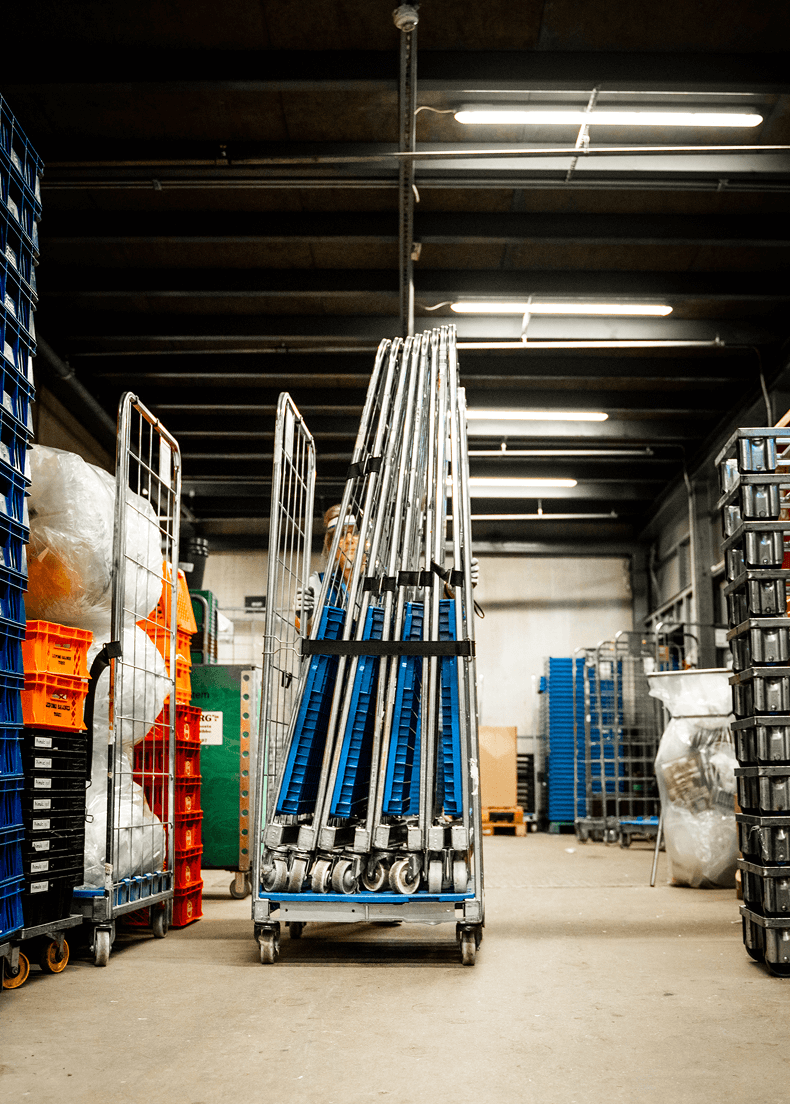
Roll containers are wheeled, cage-like transport units designed for efficient material handling in warehouses and distribution centres. These versatile containers feature sturdy metal frames with mesh or solid sides, allowing workers to easily move goods throughout warehouse operations whilst reducing manual handling and improving ergonomic safety. They serve as essential equipment for order picking, inventory storage, and goods transportation.
Understanding roll containers in modern warehousing operations
Roll containers represent a cornerstone of modern intralogistics operations, providing warehouses with flexible and efficient material handling capabilities. These wheeled transport units have evolved from simple trolleys into sophisticated logistics tools that integrate seamlessly with automated systems and lean manufacturing principles.
In today’s fast-paced warehouse environments, roll containers bridge the gap between manual handling and fully automated systems. They enable workers to move substantial quantities of goods with minimal physical effort whilst maintaining the flexibility to navigate tight spaces and adapt to changing operational requirements.
The significance of roll containers extends beyond simple transportation. They contribute to space optimisation, reduce product damage, and support sustainable logistics practices by eliminating the need for excessive packaging materials like stretch film in many applications.
What is a roll container and how does it work?
A roll container consists of a metal frame mounted on wheels, typically featuring three or four sides with mesh or solid panels. The basic design includes a flat base for load stability, vertical supports for containment, and swivel castors for manoeuvrability in confined warehouse spaces.
The operational principle centres on mobility and containment. Workers load goods into the container, which can then be pushed or pulled to different locations within the warehouse. The wheeled design distributes weight evenly, allowing a single person to transport loads that would otherwise require multiple workers or mechanical equipment.
Modern roll containers incorporate ergonomic features such as comfortable push handles, smooth-rolling wheels, and optimal height designs that reduce strain on workers’ backs and shoulders. Many models include additional features like removable sides for easy loading or folding mechanisms for space-efficient storage when empty.
What are the main uses of roll containers in warehouse operations?
Roll containers serve multiple critical functions across warehouse operations, with order picking being one of their primary applications. Workers use them to collect items from various storage locations, creating efficient picking routes that minimise travel time and physical effort.
In goods transportation, roll containers facilitate the movement of products between different warehouse zones, from receiving areas to storage locations, and from picking areas to dispatch points. Their wheeled design makes them ideal for covering substantial distances within large warehouse facilities.
Cross-docking operations benefit significantly from roll containers, as they enable rapid transfer of goods from incoming to outgoing vehicles without intermediate storage. The containers can be pre-loaded and positioned strategically to streamline the sorting and redistribution process.
Integration with automated systems represents a growing application area. Roll containers can work alongside conveyor systems, automated guided vehicles, and robotic picking systems, serving as mobile storage units that complement automated material handling equipment.
Why are roll containers important for warehouse efficiency?
Roll containers deliver substantial efficiency gains through space optimisation and reduced handling time. Their stackable or nestable designs maximise storage density when not in use, whilst their mobility eliminates the need for fixed storage solutions in many applications.
Ergonomic benefits significantly impact warehouse productivity by reducing worker fatigue and injury risk. The wheeled design minimises lifting requirements, whilst the contained structure prevents items from falling during transport, creating safer working conditions.
Cost reduction occurs through decreased labour requirements, reduced product damage, and elimination of packaging materials. Many operations report substantial savings in stretch film usage and reduced product shrinkage when implementing roll container systems.
The contribution to lean logistics principles includes waste reduction, improved material flow, and enhanced workplace organisation. Roll containers support just-in-time delivery systems and help maintain organised, clutter-free warehouse environments.
Key considerations for implementing roll containers in your warehouse
Successful roll container implementation requires careful assessment of your warehouse layout, operational requirements, and integration capabilities. Consider factors such as aisle widths, floor surfaces, and door openings to ensure containers can move freely throughout your facility.
Selection criteria should include load capacity requirements, size specifications, and durability standards appropriate for your operational intensity. Evaluate whether foldable models offer storage advantages or whether nestable designs better suit your space constraints.
Integration with existing systems demands attention to compatibility with current material handling equipment, warehouse management systems, and operational procedures. Plan for staff training to maximise adoption and ensure proper usage techniques.
Optimisation strategies focus on establishing efficient workflows, maintaining equipment properly, and regularly reviewing performance metrics. Consider implementing standardised procedures for loading, routing, and maintenance to achieve maximum efficiency gains from your roll container investment.
Transform your warehouse operations with professional material handling solutions
Ready to enhance your warehouse efficiency with high-quality roll containers and material handling equipment? Explore our comprehensive range of material handling solutions designed to meet the demanding requirements of modern logistics operations.
Our expert team is ready to help you select the perfect roll containers and material handling equipment for your specific operational needs. Contact us today to discuss your requirements and discover how our solutions can transform your warehouse productivity and efficiency.