




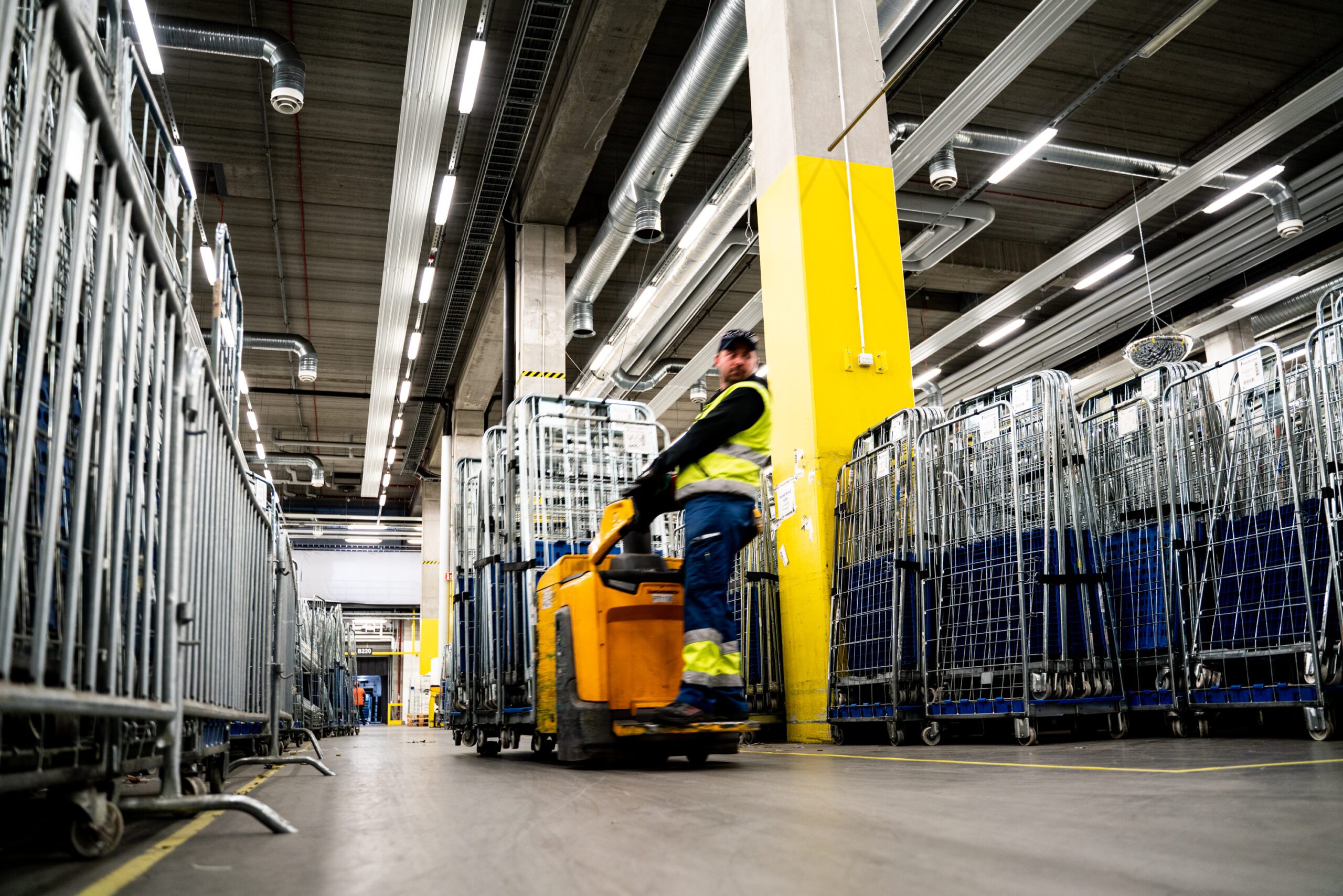
A roll container is a wheeled material handling unit featuring a sturdy frame with mesh or solid sides, designed to transport and store goods efficiently in warehouses and distribution centres. These versatile containers combine the mobility of wheels with secure containment, making them essential equipment for streamlined logistics operations across retail, manufacturing, and distribution industries.
Understanding roll containers in modern logistics
Roll containers serve as the backbone of efficient intralogistics operations, providing a reliable solution for moving goods throughout warehouses, distribution centres, and retail environments. These wheeled units have become indispensable in modern supply chains due to their ability to reduce manual handling whilst maintaining product security.
The fundamental design of roll containers addresses key logistics challenges including space optimisation, ergonomic handling, and operational efficiency. Their wheeled base allows workers to transport heavy loads with minimal physical strain, whilst their containment features protect goods during transit and storage.
Industries ranging from retail distribution to food manufacturing rely on roll containers to maintain smooth material flows. Their versatility makes them suitable for both manual operations and automated systems, adapting to various warehouse layouts and operational requirements.
What is a roll container and how does it work?
A roll container consists of a wheeled base platform supporting a frame structure with mesh or solid sides, typically available in 2, 3, or 4-sided configurations. The wheels enable easy manoeuvrability, whilst the frame provides secure containment for various types of goods.
The basic structure includes a robust steel frame designed to withstand regular use in demanding environments. The mesh sides offer excellent product visibility, reducing picking errors and enabling quick inventory checks. The wheeled base typically features swivel castors for enhanced manoeuvrability in tight spaces.
Roll containers function by providing a mobile storage solution that can be easily pushed or pulled by warehouse staff. Their design allows for efficient loading and unloading processes, with many models featuring drop-down sides or removable panels for improved accessibility.
What are the different types of roll containers available?
Roll containers come in several configurations to meet diverse logistics needs. Foldable models offer space-saving benefits when not in use, whilst nestable versions stack efficiently for storage and return transport.
Standard roll cages feature fixed mesh sides and are ideal for general-purpose applications. Foldable cages can collapse flat when empty, dramatically reducing storage space requirements and transport costs. Nestable containers fit inside each other when empty, optimising return logistics.
Specialised designs include two-sided containers for easy loading, three-sided models for secure transport, and four-sided versions for maximum containment. Industry-specific variations include food-grade containers for hygiene-sensitive environments and heavy-duty models for industrial applications.
| Container Type | Key Features | Best Applications |
|---|---|---|
| Foldable | Collapsible sides, space-saving storage | Retail distribution, return logistics |
| Nestable | Stackable design, efficient empty transport | High-volume operations, cost reduction |
| Fixed Frame | Permanent structure, maximum durability | Heavy-duty applications, frequent use |
How do roll containers improve warehouse efficiency?
Roll containers significantly enhance warehouse efficiency by reducing manual handling requirements and streamlining material movement processes. Workers can transport larger quantities of goods with less physical effort, improving productivity and reducing fatigue.
Space utilisation improves through standardised dimensions that integrate seamlessly with warehouse layouts and storage systems. The wheeled design enables efficient movement through narrow aisles and around obstacles, maximising facility throughput.
Picking and packing processes become faster as roll containers can be positioned directly at workstations, eliminating unnecessary walking and lifting. The visibility provided by mesh sides reduces picking errors and speeds up inventory verification.
Ergonomic benefits include reduced back strain and lifting injuries, as goods remain at accessible heights throughout the handling process. This leads to improved worker safety and reduced absenteeism due to workplace injuries.
What industries commonly use roll containers?
Retail distribution represents the largest application area for roll containers, where they facilitate efficient movement of goods from distribution centres to retail stores. The containers’ design supports both manual handling and automated conveyor systems.
Food manufacturing facilities utilise specialised roll containers that meet hygiene standards whilst providing secure transport for packaged goods. The easy-clean surfaces and food-grade materials ensure compliance with industry regulations.
Logistics providers rely on roll containers for cross-docking operations and last-mile delivery services. Their standardised dimensions enable efficient vehicle loading and reduce handling time at delivery points.
Industrial production environments use heavy-duty roll containers for moving components and finished goods between production stages. The robust construction withstands demanding manufacturing conditions whilst maintaining operational efficiency.
Key takeaways for implementing roll containers in your logistics operations
Successful roll container implementation requires careful consideration of your specific operational needs and facility constraints. Container selection should align with your product types, handling volumes, and space limitations.
Integration with existing systems involves evaluating compatibility with current warehouse equipment, storage configurations, and workflow processes. Consider how roll containers will interact with conveyor systems, loading docks, and storage areas.
Training staff on proper usage techniques ensures maximum efficiency and safety benefits. This includes correct loading procedures, safe handling practices, and maintenance requirements to extend container lifespan.
Roll containers contribute to sustainable logistics by reducing packaging waste, improving space utilisation, and extending equipment lifespan through durable construction. Their reusable nature supports circular economy principles whilst delivering long-term cost savings.
When selecting roll containers, prioritise solutions that offer flexibility for future growth and changing operational requirements. The right choice will enhance your intralogistics performance whilst supporting your journey towards more efficient, sustainable operations.
Explore our comprehensive material handling solutions
Ready to optimise your warehouse operations with professional-grade roll containers? Discover our complete range of material handling equipment designed to meet the demanding requirements of modern logistics operations.
Our expert team is ready to help you select the ideal roll container solution for your specific needs. Contact us today to discuss your requirements and learn how our material handling solutions can enhance your operational efficiency.