




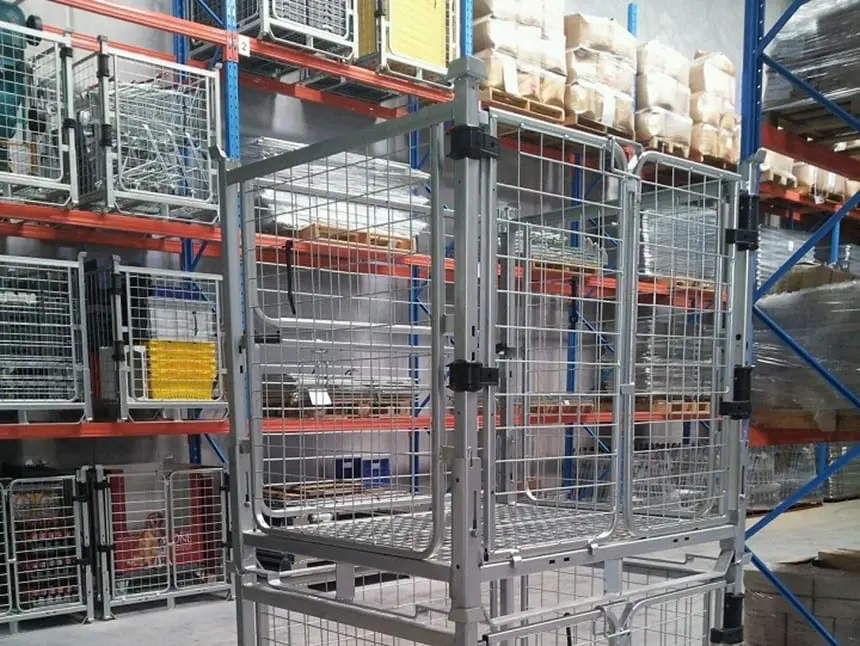
The main difference between foldable cages and traditional storage containers lies in their design flexibility and space efficiency. Foldable cages can collapse when empty, reducing storage space by up to 75%, whilst traditional containers maintain their rigid structure regardless of contents. This fundamental difference impacts transportation costs, warehouse space utilisation, and overall logistics efficiency, making foldable solutions increasingly popular for modern supply chain operations.
Understanding storage container options in modern logistics
Modern logistics operations face increasing pressure to optimise space utilisation and reduce operational costs. The evolution of storage solutions has led to innovative designs that address these challenges whilst maintaining durability and functionality.
Traditional rigid containers have long been the standard in warehousing and distribution. However, the rise of e-commerce and lean logistics principles has created demand for more space-efficient alternatives. Foldable cages represent this evolution, offering the same protective qualities as conventional containers whilst addressing the critical issue of empty space transportation.
The choice between foldable and traditional storage containers significantly impacts operational efficiency, from warehouse space allocation to transportation costs. Understanding these differences helps logistics managers make informed decisions that align with their specific operational requirements and sustainability goals.
What are foldable cages and how do they work?
Foldable cages are collapsible storage containers designed to fold flat when empty, typically reducing their volume by 70-80% compared to their assembled state. They feature hinged sides and bases that can be quickly folded or unfolded without tools.
The construction typically involves steel or aluminium frames with mesh or solid panels that provide visibility and ventilation. The folding mechanism uses spring-loaded hinges or simple pivot points that allow sides to fold inward against the base. This design maintains structural integrity when loaded whilst enabling rapid collapse when empty.
Key operational features include:
- Quick assembly and disassembly in under 30 seconds
- Stackable design in both folded and assembled states
- Ergonomic handles and smooth-rolling castors for easy manoeuvrability
- Mesh construction for excellent product visibility and airflow
The stackable design allows multiple folded units to occupy minimal floor space, making them ideal for operations with varying inventory levels or seasonal fluctuations.
What makes traditional storage containers different from foldable alternatives?
Traditional storage containers maintain a fixed, rigid structure that cannot be altered regardless of contents. They’re built with permanent joints and solid construction that prioritises maximum durability over space efficiency.
These containers typically feature welded or bolted frames with solid metal or plastic panels. The rigid construction provides superior protection for heavy or fragile items and can withstand more demanding industrial environments. Traditional containers often have higher weight capacities and longer operational lifespans due to their robust construction.
Distinctive characteristics include:
- Permanent structural integrity with no moving parts
- Higher load-bearing capacity for heavy industrial applications
- Simplified maintenance with fewer mechanical components
- Consistent dimensions that never vary
The fixed structure design makes traditional containers ideal for operations requiring maximum durability and consistent handling processes, particularly in heavy manufacturing or long-term storage applications.
How do space requirements compare between foldable and traditional containers?
Space utilisation differences between foldable and traditional containers become most apparent during empty transportation and storage. Foldable cages can reduce empty storage space by 75%, whilst traditional containers maintain full volume regardless of contents.
In warehouse environments, this translates to significant space savings. A storage area that accommodates 100 traditional empty containers can hold 400-500 folded cages in the same footprint. This efficiency extends to transportation, where return journeys can carry multiple folded units instead of empty air.
| Aspect | Foldable Cages | Traditional Containers |
|---|---|---|
| Empty storage space | 75% reduction when folded | Full volume maintained |
| Transportation efficiency | 4-5x more units per return trip | Same volume loaded or empty |
| Warehouse footprint | Minimal when not in use | Consistent space requirement |
The space optimization benefits of foldable solutions become more pronounced in operations with high container turnover or seasonal variations, where empty storage can consume valuable warehouse real estate.
Which storage solution is better for different logistics operations?
The optimal choice depends on specific operational requirements, handling frequency, and industry demands. Foldable cages excel in retail distribution, food manufacturing, and last-mile delivery where space efficiency and frequent handling are priorities.
Foldable cages work best for:
- Retail supply chains with frequent deliveries and returns
- Food and beverage distribution requiring hygiene and visibility
- E-commerce operations with variable inventory levels
- Cross-docking facilities with rapid turnover
Traditional containers are preferable for:
- Heavy industrial manufacturing with robust durability needs
- Long-term storage applications
- Environments with minimal handling requirements
- Operations prioritising maximum load capacity
Consider handling frequency as a key decision factor. High-turnover operations benefit more from foldable solutions, whilst low-frequency, high-durability applications favour traditional containers.
Key takeaways for choosing the right storage container solution
The decision between foldable cages and traditional containers should align with your operational priorities and logistics workflow. Foldable solutions offer superior space efficiency and transportation cost savings, whilst traditional containers provide maximum durability and load capacity.
Primary decision factors include:
- Space constraints and storage costs in your facility
- Transportation frequency and return logistics
- Product types and handling requirements
- Long-term durability versus operational flexibility needs
For operations seeking to optimise space utilisation and reduce transportation costs, foldable cages provide measurable benefits through improved logistics efficiency. However, applications requiring maximum durability and consistent structural integrity may find traditional containers more suitable.
The trend towards sustainable logistics and space optimisation continues to drive adoption of foldable solutions, particularly in retail and food distribution sectors where efficiency and flexibility are paramount.
Discover our complete material handling solutions
Ready to optimise your storage and logistics operations? Explore our comprehensive range of material handling equipment to find the perfect solution for your specific needs. From foldable cages to traditional containers and beyond, we offer innovative storage solutions designed to enhance efficiency and reduce operational costs.
Have questions about which storage solution is right for your operation? Contact our experts today for personalised advice and recommendations tailored to your unique logistics requirements. Our team is ready to help you make the best choice for your business.