




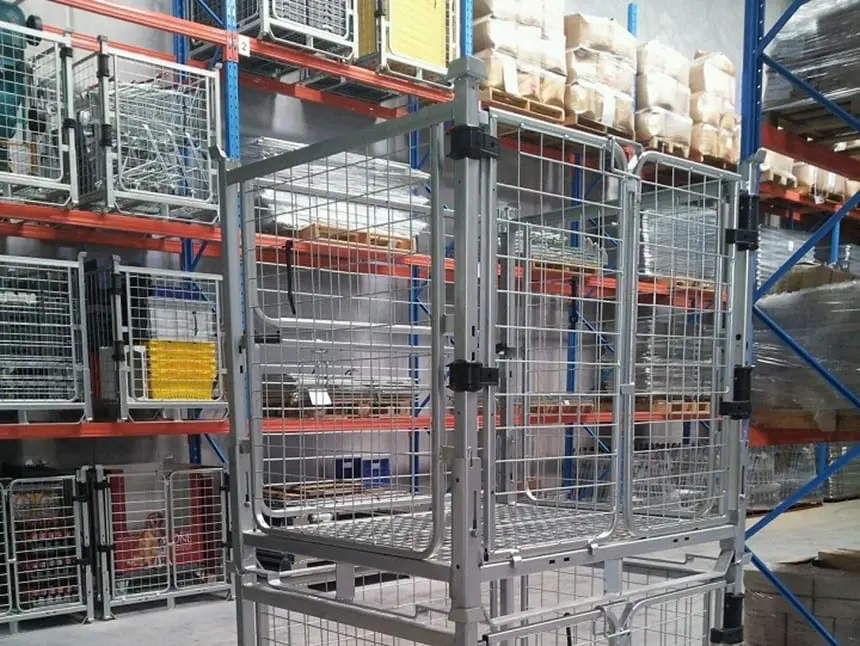
Modern foldable cages incorporate advanced safety features including secure locking mechanisms, ergonomic handles, reinforced structural elements, and enhanced visibility designs. These innovations protect workers from strain injuries whilst preventing cargo damage during transport, making them essential for safe warehouse operations.
Understanding Modern Foldable Cage Safety Innovations
The evolution of safety features in foldable cages represents a significant advancement in warehouse equipment design. Modern intralogistics operations demand solutions that protect both workers and cargo throughout the supply chain.
Today’s foldable cages incorporate intelligent design principles that address common workplace hazards. These innovations have transformed simple storage containers into sophisticated safety systems that reduce injury risks whilst maintaining operational efficiency.
The focus on worker protection has driven manufacturers to develop comprehensive safety features that address every aspect of cage handling, from initial setup through transport and storage. This holistic approach ensures that safety considerations are integrated into every interaction with the equipment.
What Are the Essential Safety Features in Today’s Foldable Cages?
Essential safety features in modern foldable cages include robust locking mechanisms, reinforced corner joints, ergonomic handles, and stable base designs. These elements work together to create a comprehensive safety system that protects users throughout the handling process.
Structural reinforcements form the foundation of cage safety. Modern designs incorporate strengthened corner connections and reinforced mesh panels that maintain integrity under load. These improvements prevent structural failures that could lead to cargo spills or worker injuries.
Ergonomic handles positioned at optimal heights reduce strain during manual handling. The handles feature comfortable grips and are strategically placed to promote proper lifting techniques, minimising the risk of back injuries and repetitive strain disorders.
| Safety Feature | Primary Function | Worker Benefit |
|---|---|---|
| Locking mechanisms | Prevent accidental collapse | Reduces crush injury risk |
| Ergonomic handles | Improve grip and control | Prevents strain injuries |
| Reinforced structure | Maintains cage integrity | Prevents structural failures |
| Stable base design | Ensures even weight distribution | Reduces tipping hazards |
How Do Locking Mechanisms Prevent Accidents in Foldable Cages?
Locking mechanisms prevent accidents by automatically engaging when cages are in use and requiring deliberate action to disengage. These systems include spring-loaded latches, positive-lock pins, and fail-safe mechanisms that secure the cage structure during transport and handling.
Automatic engagement features ensure that cages lock into position without requiring workers to remember additional steps. This fail-safe approach eliminates human error as a factor in cage security, providing consistent protection regardless of operator experience or workload pressure.
Modern locking systems incorporate visual and tactile feedback to confirm proper engagement. Workers can immediately verify that the cage is securely locked through clear indicators, reducing uncertainty and preventing the use of improperly secured equipment.
The deliberate disengagement process requires intentional action to fold the cage, preventing accidental collapse during use. This design principle ensures that cages remain stable throughout their intended use cycle whilst allowing controlled folding when storage is required.
Why Are Ergonomic Design Features Crucial for Worker Safety?
Ergonomic design features are crucial because they reduce physical strain and promote natural body mechanics during cage handling. Proper handle positioning, balanced weight distribution, and smooth folding mechanisms minimise the risk of musculoskeletal injuries that commonly occur in warehouse environments.
Handle positioning at appropriate heights eliminates awkward bending and reaching motions. Optimal ergonomics ensure that workers can maintain proper posture whilst maneuvering loaded cages, reducing stress on the spine and joints.
Weight distribution design prevents the cage from becoming front-heavy or unstable during transport. This balance reduces the physical effort required to control the cage and prevents sudden shifts that could cause worker injury or cargo damage.
Smooth folding mechanisms require minimal force to operate, reducing strain on hands and wrists. The controlled folding action prevents sudden movements that could cause pinching or crushing injuries during cage setup and storage.
What Role Do Visibility Features Play in Foldable Cage Safety?
Visibility features play a critical role by enabling workers to see cage contents clearly and making the cages themselves more visible to equipment operators. Mesh designs, strategic colour coding, and reflective elements prevent collision accidents whilst reducing picking errors.
Mesh panel designs provide excellent product visibility, allowing workers to identify contents without opening or moving the cage. This transparency feature reduces handling time and prevents errors that could lead to unsafe lifting or incorrect cargo placement.
Colour coding systems help workers quickly identify different cage types and their intended uses. This visual differentiation prevents the misuse of equipment and ensures that cages are used within their safe operating parameters.
Enhanced visibility in warehouse environments prevents collision accidents between cages and mobile equipment. The combination of bright colours and strategic design elements makes cages easily identifiable to forklift operators and other warehouse personnel.
Key Takeaways for Choosing Safe Foldable Cage Solutions
When selecting foldable cage solutions, prioritise equipment with certified safety features, robust locking mechanisms, and ergonomic design elements. Ensure that chosen solutions comply with relevant industry standards and provide comprehensive protection for both workers and cargo.
Look for cages with integrated safety systems that address multiple hazard types simultaneously. The most effective solutions combine structural integrity, ergonomic design, and visibility features into a cohesive safety package.
Consider the specific requirements of your operation when evaluating safety features. Different environments may require additional safety considerations, such as enhanced visibility for high-traffic areas or specialised locking mechanisms for automated systems.
Regular maintenance and proper training remain essential components of cage safety. Even the most advanced safety features require proper use and maintenance to provide optimal protection throughout the equipment’s service life.
To explore our comprehensive range of safe and innovative foldable cages and other material handling solutions, visit our complete product portfolio. Our expert team is ready to help you find the perfect safety-focused equipment for your specific requirements.
Ready to enhance your warehouse safety? Contact our specialists today to discuss your material handling needs and discover how our advanced foldable cage solutions can improve both safety and efficiency in your operations.